Building a Private Label Beverage Brand: Why Leading Retailers Are Doing It Now
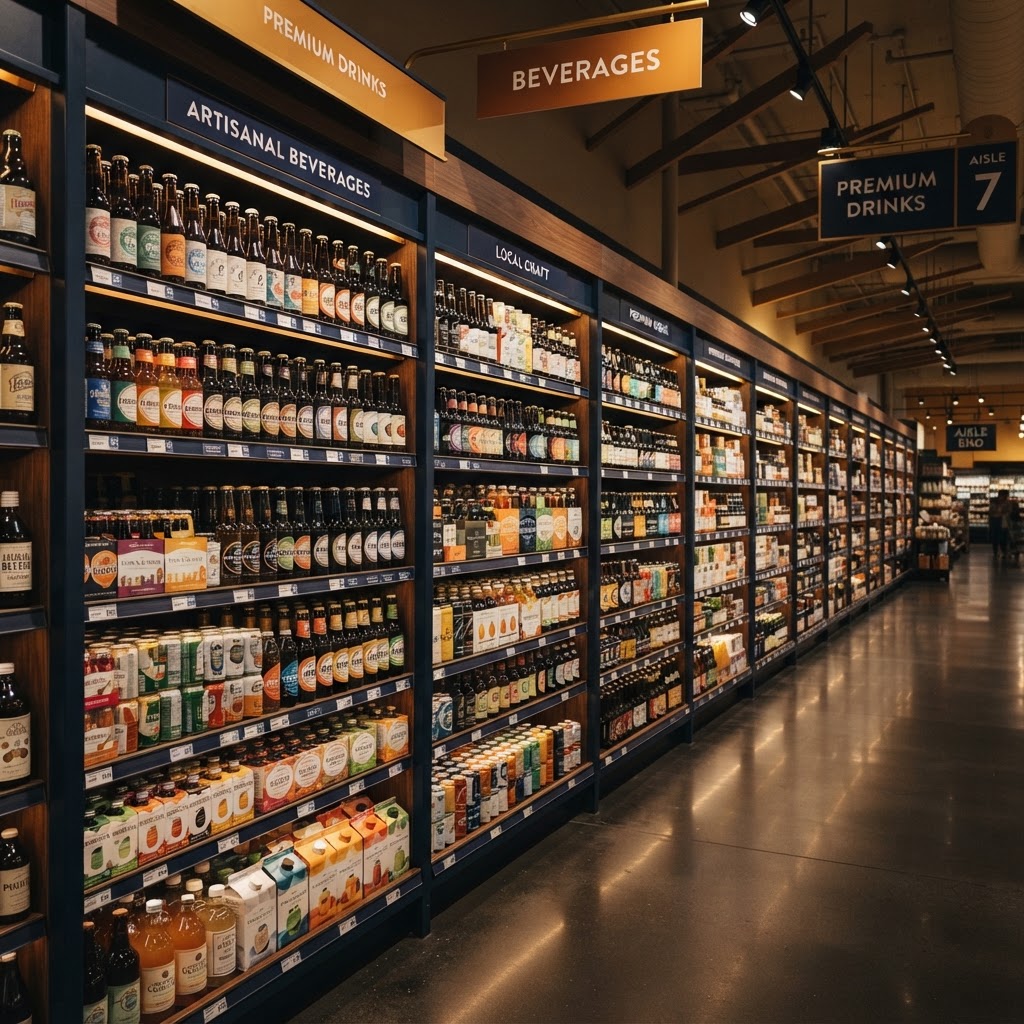
Private label in beverage alcohol has crossed a threshold. What was once a secondary strategy for category managers looking to fill shelf gaps has become a primary commercial objective for the most sophisticated retailers and hospitality operators in the U.S. market. The economics have shifted, the compliance infrastructure has matured, and the consumer appetite for discovery and exclusivity have created strong commercial incentives for operators who can build and own their own product lines.
A proprietary label gives a retailer or operator something that no branded SKU can provide: a product that only they sell. Customers who develop a preference for that product can only fulfill it in one place. That exclusivity builds loyalty, drives repeat visits, and improves the margin architecture of the beverage program without requiring a branded supplier to validate the investment.
The challenge is execution. Custom label development involves producer sourcing, product development, compliance management, and wholesale activation, each of which requires expertise that is outside the core competency of most retail or hospitality businesses. RTM structures its program to handle all of it.
Why the Economics Have Shifted
The branded resale model that has anchored retail and hospitality beverage programs for decades is under sustained pressure. Manufacturer pricing structures leave limited room for retailer-controlled margin. Promotional calendars dictate when and how a brand can be featured, which shifts control of the sales cycle away from the operator carrying the product. And in categories where consumer brand loyalty is discovery-driven rather than entrenched, the branded SKU that performs well this quarter carries no guarantee of performing well the next.
A proprietary label changes the commercial calculus at every point in that structure. Price architecture is set by the retailer or operator, not dictated by a manufacturer’s national pricing sheet. Margin structure improves, since a proprietary product removes a layer of manufacturer markup from the cost basis. Exclusivity removes the promotional calendar dependency entirely, because no competing account carries the same SKU. And brand equity, unlike a branded resale relationship that can end with a distribution decision made elsewhere, accrues directly to the retailer or operator who built it.
Where the Opportunity Is Strongest
Not every category is an equally strong candidate for proprietary label development. The categories that produce the strongest results tend to share three characteristics.
The first is a category where consumer brand loyalty is still forming rather than entrenched. A category with one or two dominant incumbent brands and an otherwise fragmented competitive set gives a proprietary label room to establish itself as a credible alternative. A category with deeply entrenched brand loyalty does not offer that same room.
The second is an authentic origin story that supports a genuine proprietary brand narrative, a characteristic that emerging import categories frequently offer in ways that mature, saturated domestic categories cannot replicate.
The third is an accessible price point. A proprietary label positioned at a price tier that requires extensive consumer education to justify adds a commercial hurdle that most retail or hospitality operators are not equipped to clear on their own. A category manager evaluating a proprietary program should assess their category against these three characteristics before committing resources.
What Determines Whether a Program Succeeds or Fails
The difference between a proprietary label program that delivers sustainable commercial results and one that underperforms comes down to three execution factors.
Producer selection determines supply chain reliability. A program built on a producer without established quality control, adequate production capacity, or export experience creates supply chain risk that tends to surface months after launch, typically at the worst possible moment for a retailer counting on consistent supply.
Compliance management determines whether the program reaches market on schedule and stays there. Inadequate compliance management, whether in federal label approval, state registration, or control state listing, creates delays that push back launch timelines and, in the more serious cases, creates legal exposure for the retailer or operator whose name is on the label.
Wholesale activation determines whether the product actually reaches the shelf or the menu. A proprietary label with a rushed or absent wholesale activation plan means the product stalls in the warehouse rather than moving into distribution, regardless of how strong the underlying product or brand story is.
Timeline Reality
A retailer or operator evaluating a proprietary beverage program should build realistic timelines into the planning cycle from the outset. Domestic wine programs typically take under three months. Imported wine programs run three to six months. Domestic spirits programs run two to three months. Imported spirits programs run three to six months. These figures should inform the planning cycle rather than be treated as a fixed internal process to manage.
The Integrated Path Forward
Producer sourcing, compliance management, and wholesale activation are not three separate vendor relationships for a retailer or operator to coordinate independently. RTM delivers all three as a single integrated program, which is what allows a retailer or hospitality operator to capture the commercial upside of a proprietary label without absorbing the execution risk that causes most independent attempts to stall. For a full walkthrough of how that process runs from initial brief to first sale, see From Brief to Shelf: How RTM’s Custom Label Process Works.
If you are a retailer or hospitality operator evaluating a proprietary beverage program, contact RTM Imports to arrange a no-commitment discovery consultation.