Building a proprietary beverage brand is one of the most commercially effective strategies available to U.S. retailers, hospitality groups, and restaurant chains. A well-executed custom label program delivers margin control, shelf differentiation, and the kind of consumer relationship that branded resale cannot replicate. It also involves a compliance and production process that most retail operators are not equipped to manage independently.
RTM’s custom label program exists to bridge that gap. Here is how the process works, from the initial brief through to the first sale.
Why Custom Labels Have Become a Priority
The retail and hospitality landscape has changed. Category saturation, margin compression from branded resale, and the increasing consumer appetite for discovery and exclusivity have created strong commercial incentives for operators who can build and own their own product lines.
A proprietary label gives a retailer or operator something that no branded SKU can provide: a product that only they sell. Customers who develop a preference for that product can only fulfill it in one place. That exclusivity builds loyalty, drives repeat visits, and improves the margin architecture of the beverage program without requiring a branded supplier to validate the investment.
The challenge is execution. Custom label development involves producer sourcing, product development, compliance management, and wholesale activation, each of which requires expertise that is outside the core competency of most retail or hospitality businesses. RTM structures its program to handle all of it.
Step One: The Strategic Brief
Every program begins with a discovery session. RTM works with the client to define the target consumer, the competitive shelf set, the price point architecture, and the brand story the label needs to tell. A clear brief is not a formality. It is the document that determines whether the production partner selected at the next stage is the right fit, and whether the final product performs at retail or on a menu.
Questions the brief addresses: What category? What price tier? What occasion or channel? What visual and brand positioning is the client seeking? What is the timeline requirement? What exclusivity structure is needed? The answers shape every subsequent decision in the program.
Step Two: Producer Matching
RTM maintains direct relationships with vetted producers across key beverage-producing regions. Producer matching is not a catalog search. It is a structured evaluation process that assesses quality benchmarks, production capacity, export certifications, and stylistic fit with the client’s brief.
The producer relationship matters beyond the initial contract. Supply chain continuity, quality consistency, and the ability to scale production as the program grows are all functions of the depth of the importer’s relationship with the producing facility. RTM invests in those relationships personally, not just contractually.
Step Three: Product Development
Once a producer is matched, the product development cycle begins. RTM manages liquid selection, sample review, sensory benchmarking, and iterative refinement until the product meets the client’s specifications and RTM’s quality standards.
This stage can involve multiple sample rounds and, for imported products, international logistics for sample shipment and review. Building realistic timelines for this stage into the program plan is essential. Rushed product development produces products that do not perform.
Step Four: Brand and Label Design
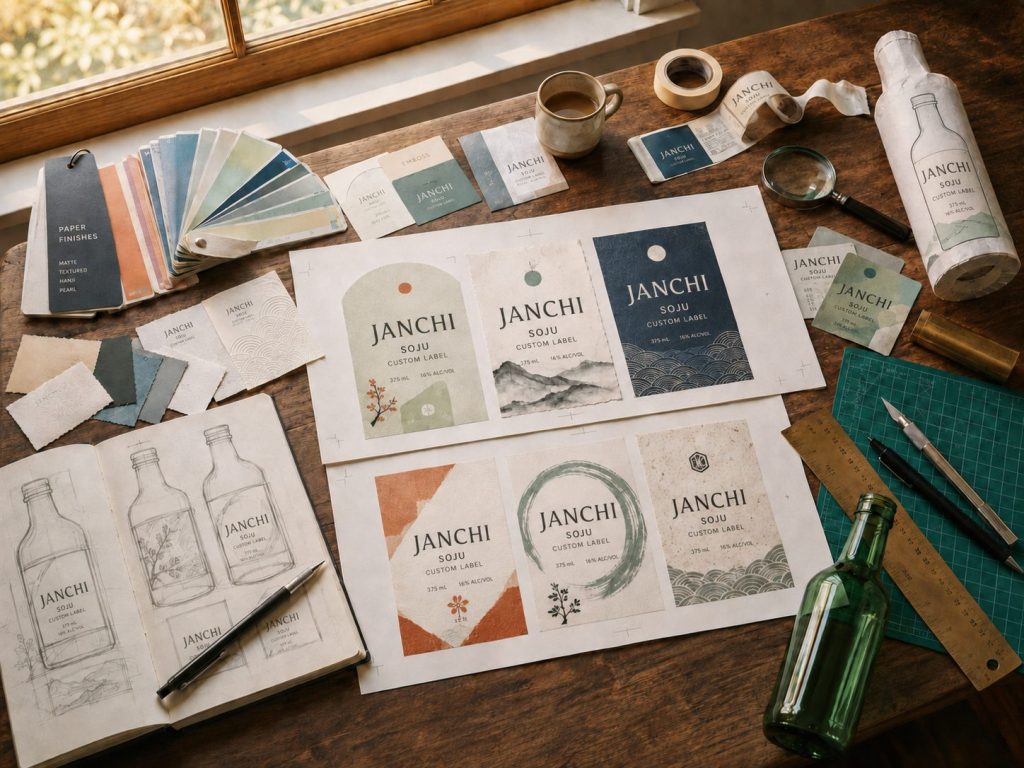
Label design, bottle selection, closure, and packaging are developed with retail shelf impact and brand coherence as the primary objectives. Every visual element is built to communicate quality at the point of purchase and to support the brand story defined in the brief.
TTB label requirements impose specific mandatory elements on every U.S. beverage alcohol label. Integrating those requirements into a design that is also commercially compelling requires experience with both the regulatory framework and retail shelf dynamics.
Step Five: Compliance Clearance
Every proprietary label requires its own TTB Certificate of Label Approval, regardless of whether the underlying liquid has existing approvals under another brand name. RTM manages the full COLA process, including any required formula approvals, for every custom label program.
State registration follows federal COLA approval. Products sold nationally require registration in each state’s ABC system. RTM’s existing state license network enables that registration process to proceed efficiently, without requiring the client to build or manage relationships with 50 separate regulatory agencies.
Step Six: Wholesale Activation and Launch
A custom label does not automatically inherit distribution. Wholesale onboarding requires presenting the new SKU to wholesale partners, providing brand materials and sell sheets, and building account-level placement plans.
RTM coordinates the commercial launch with its wholesale network, providing the sales support and in-market activation that moves product from warehouse to shelf in the first distribution cycle.
Timeline Expectations
Domestic wine programs can be completed in under three months. Imported wine programs typically run three to six months. Domestic spirits programs run two to three months. Imported spirits programs run three to six months. These are indicative timelines based on standard programs. Final timelines depend on category, state registration complexity, and production partner capacity.
Clients who have completed the brief process and confirmed a producer match are the clients whose timelines stay on track. Programs that extend beyond projected timelines most commonly do so when the brief stage is compressed or when formula approval or control state timelines were not factored into the original plan.
If you are a retailer or hospitality operator evaluating a proprietary beverage program, contact RTM Imports to arrange a no-commitment discovery consultation.