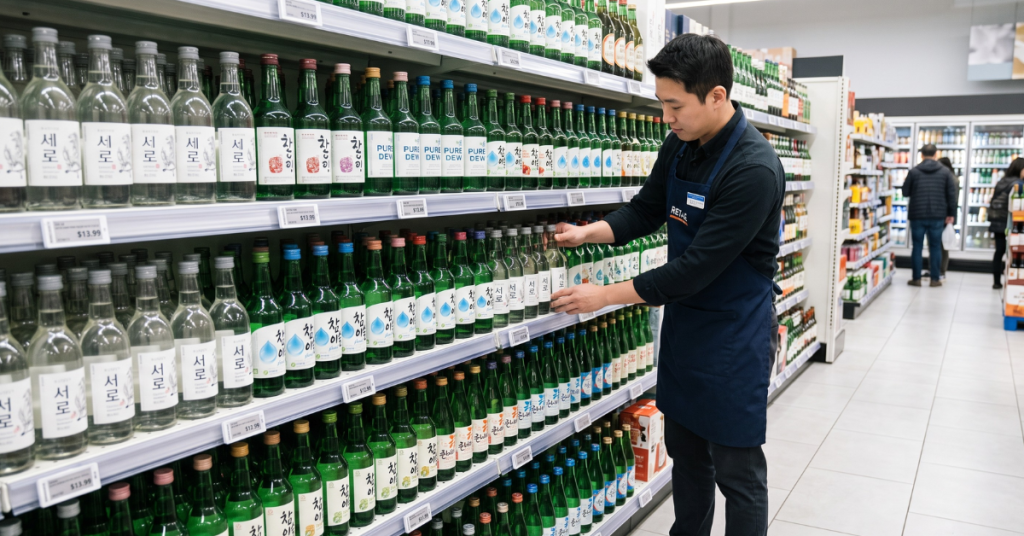
The US soju market crossed $935 million in 2024. That figure has been cited widely across trade media, and for good reason: it reflects a category that moved from niche to commercially significant in under a decade. What receives less attention is the mechanics behind that growth. Soju did not arrive on national chain shelves through consumer demand alone. It arrived there because the category met the specific criteria that chain retailers use to issue authorization, and because the wholesale infrastructure existed to support it.
Understanding how soju earned chain retail authorization tells you more about the category’s durability than any market size projection.
The Regulatory Classification That Opened Every Door
Wine-based soju sits below 24% ABV and is classified as a wine product under federal law, not a distilled spirit. That single regulatory classification determines which retail channels the product can enter.
Spirit-based soju requires spirits distribution and can only be placed in licensed spirits retailers. In most states, that means liquor stores and licensed on-premise accounts. Wine-based soju, by contrast, can be placed in any channel authorized to sell wine, which includes grocery chains, convenience retailers, pharmacy chains, and club stores, along with traditional spirits accounts.
For a category working to build national retail presence, that distinction changes the addressable channel count by an order of magnitude. A wine-based soju brand can pursue placement in tens of thousands of retail doors that spirit-based soju cannot access.
RTM identified this channel access advantage when entering the Asian beverage category. The portfolio focus on wine-based soju was not incidental. It reflected a deliberate assessment of which product classification gave the category the best shot at mainstream retail penetration.
How Chain Retailers Evaluate a New Beverage Category
National chains do not add new categories on the basis of trend reports. They add categories on the basis of data: velocity from comparable markets, demographic fit with their core shopper, shelf space return on investment, and supplier reliability.
Soju built its chain retail case progressively. Early traction in Korean-American urban markets generated actual sell-through data. That data supported initial authorizations in pilot markets. Pilot performance generated category reports. Category reports supported chain-wide rollouts.
The process is methodical and takes time. It rewards brands backed by importers with national wholesale networks and the patience to build a market development program before expecting full chain authorization. Brands that tried to shortcut that process by pitching chain buyers on projections rather than performance struggled to gain traction.
For soju, the category data that built the chain authorization case was already in the system by the time mainstream buyers started paying attention. The category had done the work before the market recognized it.
The Wholesale Partner Role in Chain Authorization
Chain retailers buy through wholesale distributors. For a brand to reach national chain shelves, it needs wholesale partners with pre-existing retailer relationships, consistent account servicing capacity, and sales staff capable of advocating for the brand at store level.
This is where most new import categories run into structural problems. They source a product, obtain their TTB approvals, and then discover that the wholesale infrastructure required to move product to chain accounts takes years to build.
RTM’s wholesale network includes 25 or more active partners and covers all 50 states. Those relationships were built over thirty years across wine and spirits, well before the Asian beverage category entered the portfolio. When RTM brought wine-based soju to market, it did not need to build distributor relationships from scratch. It applied a category with strong consumer tailwinds to a distribution infrastructure that was already operational.
For the brands RTM represents, that infrastructure accelerated the timeline from import to chain authorization by removing the distributor relationship development phase entirely. The network existed. The question was whether the product could perform within it.
What Chain Authorizations Mean for Distributors
Soju has now secured placement across major retail channels including national grocery, convenience, and specialty accounts. That is not a projection. It is a current commercial reality reflected in active purchase orders and store-level reorder cadences.
For wholesale distributors who have not yet added a wine-based soju brand to their portfolio, that authorization record is the most relevant data point. Chain authorizations confirm that the category cleared retail buyers’ performance thresholds. They confirm that consumer demand is sufficient to justify ongoing shelf space. They confirm that the supply chain is reliable enough for national account commitments.
Distributors who add the category now are not building something from scratch. They are joining a category that has already established its retail footing. The development risk is lower than it was five years ago, and the market opportunity is larger.
What Comes Next for the Category
North America soju market projections point to continued growth through the decade, driven by retail channel expansion, on-premise penetration, and sustained consumer interest connected to Korean cultural influence in the US. The category’s penetration of mainstream retail channels is still in early stages relative to comparable beverage categories.
Distributors evaluating whether to add a wine-based soju brand should factor in that trajectory. The category has chain retail authorization, a growing consumer base, and the wholesale infrastructure to support further expansion. The brands that will benefit most from the next phase of category growth are the ones that established distributor relationships during the current window.
RTM works with wholesale partners across all 50 states and actively supports new distributor relationships for the wine-based soju category. Contact RTM’s team to discuss your market.
Looking for more from RTM Imports?
All Articles